

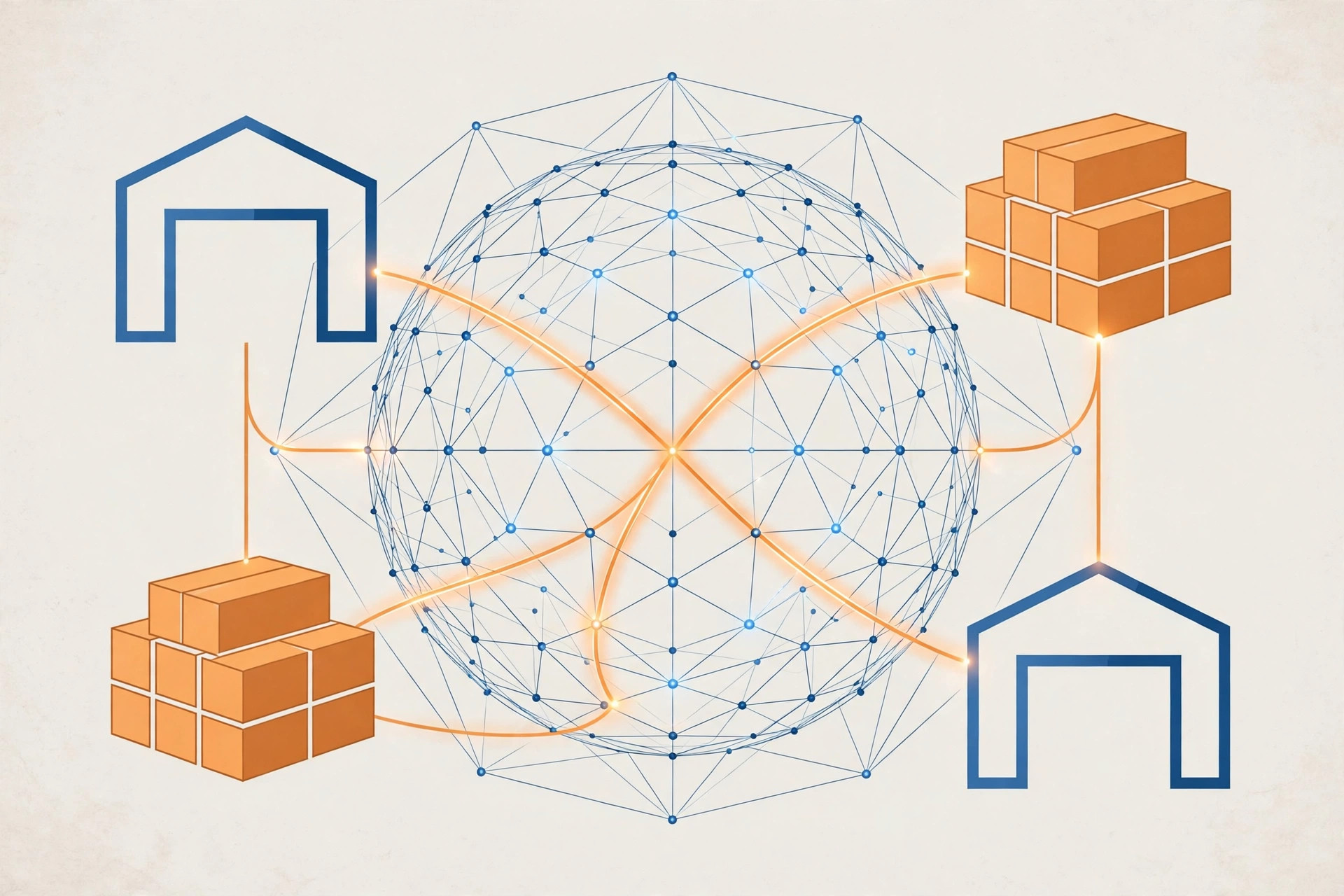
Supply chain digitalization means using digital tools such as ERP systems, real-time tracking, and AI analytics to run purchasing, inventory, warehousing, and logistics more efficiently. For most Canadian businesses, success depends less on new software than on training the people who use it. Here is what your team needs to learn, and in what order.
What does supply chain digitalization mean for a Canadian business?
For most Canadian businesses, it means replacing manual, paper-based, or spreadsheet-driven processes with connected digital systems that track goods and information in real time.
In practice, this covers purchasing, inventory control, warehousing, transport, and demand planning. Staff see live inventory across every location, and the system flags delayed shipments as they happen.
None of this replaces experienced judgment. It gives people better information, faster, but only if the team knows how to use the tools and trust the data.
Why does training matter more than the technology?
Because most supply chain software projects underperform when the people using the systems are not properly trained.
The pattern is familiar: a company buys a new ERP or warehouse system, the technology works, but staff keep working the old way. Workarounds creep in, data quality drops, and the expensive system goes underused. The bottleneck is rarely the software; it is the gap between what the technology can do and what the team can do with it.
Gartner calls this the “digital-to-reality gap.” As Suzie Petrusic, senior director analyst in Gartner’s Supply Chain Practice, put it: “The ‘digital-to-reality gap’ will continue to hamper supply chain performance objectives unless technology investments are complemented by enabling decision support for local, cross-functional decision makers.” Tools alone do not fix decisions; people who understand the tools do. (It is the same dynamic behind why digital transformations fail.)
What skills does your team need to learn?
Your team needs hands-on system skills, data literacy, and new ways of working: the five areas below, in the order to tackle them.
How should your team learn to use ERP and inventory systems?
Your team should practise in a realistic environment before touching live data.
ERP and inventory systems are the backbone of a digital supply chain, and mistakes there are costly. The best way to build confidence is hands-on practice in a sandbox that mirrors the real system. Dx.training offers an ERP sandbox on Artintech’s cloud ERP, so learners make their mistakes in training, not in production. Our ERP training guide has more detail.
Bite-sized modules work best: staff learn one workflow at a time, and digital badges or certificates mark their progress.
What does data literacy mean in a supply chain context?
It means every team member can read the dashboards and reports their systems produce, and act on what they see.
A digital supply chain generates constant signals: stock levels, lead times, on-time delivery rates, exception alerts, and demand forecasts. Data literacy means interpreting those signals, spotting what looks wrong, and knowing what to do next. It also means entering clean, complete data, because every report is only as reliable as the information behind it. No statistical training is required.
Why are AI and real-time visibility becoming standard?
Because AI-powered visibility tools are moving from competitive advantage to industry expectation.
Logistics teams increasingly rely on systems that track shipments in real time and use AI and machine learning to predict delays and flag risks. According to IDC’s FutureScape Worldwide Supply Chain predictions, by 2026, 50% of logistics teams will have deployed advanced visibility with AI/ML analytics. Your team does not need to build these tools, but managers need enough AI literacy to interpret their outputs and question vendors. Our guide to AI training for managers covers those capabilities in plain language.
How do processes and roles need to change?
Digital tools change who does what. Training should cover the new ways of working, not just which buttons to click:
- Planners move from manual data entry to managing the exceptions the system flags.
- Buyers spend less time chasing paperwork and more time managing supplier relationships.
- Managers shift from firefighting daily problems to coaching their teams on the new workflows.
These roles need different skills: communication, problem solving, and project discipline. Our PMP Exam Prep workshop builds that discipline, and customised corporate training maps new workflows to your organisation’s processes.
How should you structure the training program?
The most effective approach mixes short self-paced modules for system skills with live sessions for judgment-heavy topics.
Self-paced courses give staff flexibility: bite-sized modules on their own schedule, with badges and certificates along the way. At Dx.training, our certification path runs from Foundation through Operator and Implementer to Certified Consultant, so individuals build skills progressively.
Live workshops add discussion and judgment for topics such as AI adoption, cybersecurity, and project leadership: AI for Non-Technical People, PMP Exam Prep, Cyber Security Essentials, Intro to Robotics, Workplace Safety, and Intellectual Property. Customised corporate training maps the content to your actual processes.
Why does this matter right now?
Because investment in supply chain technology is accelerating, and the skills gap widens for every team that waits.
ResearchAndMarkets, reporting via GlobeNewswire in February 2026, valued the Digital Supply Chain and Logistics Tech market at USD 72 billion in 2025 and projected it to reach USD 146.92 billion by 2031, a compound annual growth rate of 12.62%. As suppliers, carriers, and customers adopt these tools, businesses that cannot operate digitally fall behind. Training now means your team keeps pace.
Where should your team start?
Start with the one capability that would help your business most, and build from there.
For most companies, that means ERP confidence first, then data literacy, then AI-powered visibility. Map the training to a real goal, such as cutting stockouts, so progress is visible.
If you would like help designing that starting point, get in touch with us. We offer self-paced certification programs, live workshops, and customised corporate training for Canadian businesses: info@dx.training.
It means using digital tools such as ERP systems, real-time tracking, and AI analytics to manage the flow of goods from supplier to customer: faster, more accurate operations with less paperwork.
Yes, if your team still runs inventory, purchasing, or shipping on spreadsheets, phone calls, or paper. Training helps small businesses get more from affordable cloud tools, and bite-sized modules fit around daily work.
It depends on the scope and the roles involved. System skills can be built in short modules over a few weeks; deeper capabilities such as data literacy develop over months. The Foundation to Certified Consultant path is designed for that progressive learning.
No. Operations staff need hands-on practice with the systems they use daily. Managers need the broader view: reading supply chain data, leading adoption, and coaching their teams through new ways of working.